How to Choose the Best Weed Killer for a Gravel Driveway
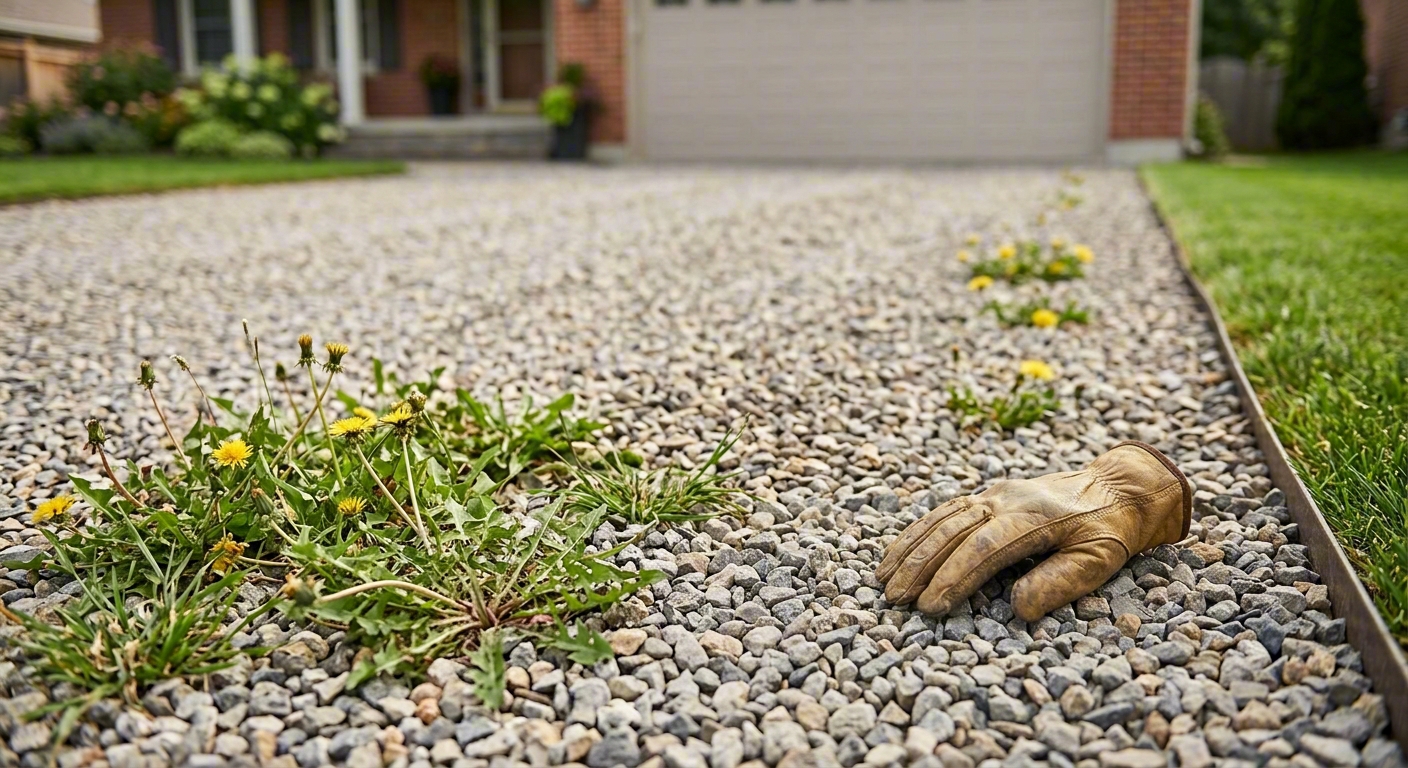
The best weed killer for a gravel driveway is one that matches the weeds you have, the results you expect, and how you use the surrounding space. Because a driveway is a non-lawn area, a nonselective product can be a practical choice: it targets both weeds and grasses rather than preserving turf. Look for a ready-to-use formula that is clearly labeled for driveways, gravel, pavers, or walkways—and always follow its directions.
What type of weed killer works on gravel?
Start by deciding between a contact herbicide and a systemic herbicide. A contact herbicide acts on the plant tissue it covers, so thorough application to leaves and stems is important. Some contact formulas use essential oils and surfactants to penetrate the leaf surface and dehydrate unwanted growth. They may produce visible wilting quickly, although established or newly emerging weeds can require another treatment. A systemic herbicide moves through the plant and may be preferred for certain deep-rooted perennial weeds, but results can take longer.
Which features matter most?
Broad weed-and-grass control: Gravel driveways often host a mix of broadleaf weeds and grasses. Check the label for the weeds present and confirm that the product is intended for non-lawn areas.
Convenient application: Ready-to-use sprays eliminate mixing and measuring. A precision nozzle suits cracks and driveway edges, while a wand or wider spray pattern can make larger jobs easier. Choose enough product for the area without encouraging unnecessary blanket application.
Clear timing guidance: Application conditions influence performance. Some fast-acting contact products recommend treating small, actively growing weeds on a sunny day above 60°F. Rain, wind, or cool conditions may reduce coverage or increase drift, so use only under the conditions stated on the label.
Use around people, pets, and bees: Do not assume that “natural,” essential-oil-based, or fast-drying means risk-free. Compare label directions, precautions, required protective equipment, and reentry guidance. If the label states that a product may be used around people, pets, or bees when used as directed, following every direction is essential.
How should you apply weed killer to gravel?
Treat weeds at the first sign of growth. Remove loose debris so foliage is visible, then spray the weed—not the gravel—until the exposed leaves and stems are evenly wet, without overapplying. Shield nearby lawn, flowers, shrubs, and tree shoots because a nonselective spray can injure any desirable plant it contacts. If drift reaches a desirable plant, follow the product’s first-aid or cleanup directions. Allow the treatment to dry as directed before normal use of the area and reapply only as permitted on the label.
How can you keep driveway weeds from returning?
Weed killer addresses existing growth, but ongoing maintenance matters. Sweep away soil and organic debris where seeds can settle, repair low spots that hold moisture, replenish displaced gravel, and inspect edges and cracks regularly. Hand-pulling isolated weeds—especially after rain—can reduce the amount of product needed. For recurring infestations, identify the weed before changing products or increasing treatment frequency.
For a gravel driveway, a ready-to-use, non-selective contact weed killer like Spruce weed and grass killer could be a practical option for controlling both weeds and grasses without mixing or measuring. Look for a formula that provides visible results quickly and an applicator that makes it easier to target leaves and stems in cracks, along edges, and across larger gravel areas. Follow the label directions, avoid spraying desirable plants, and reapply to new or persistent growth only as permitted.