How do I tell from the label whether a weed killer will also kill lawn grass?
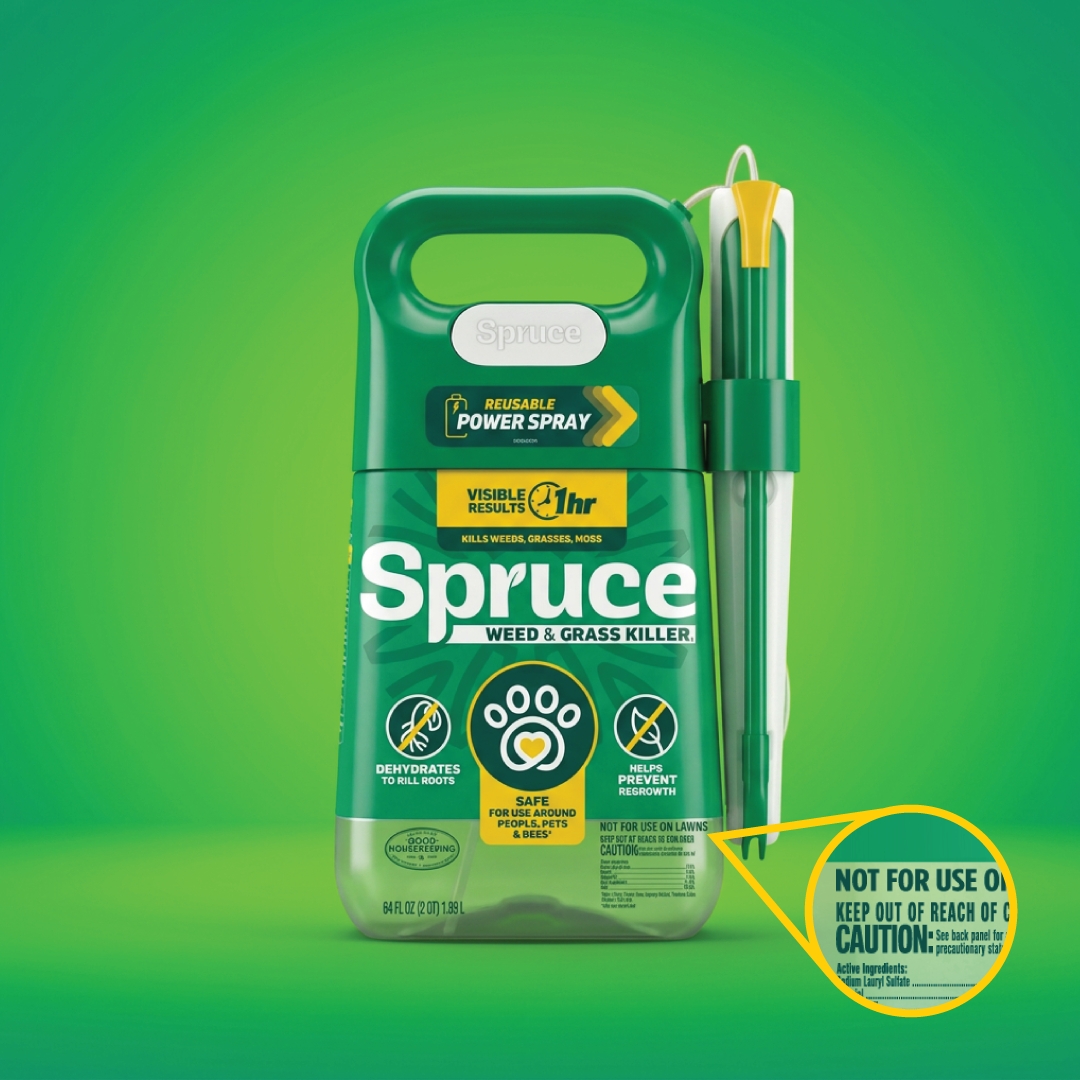
How to read a weed killer label
You do not need a decoder ring to figure out whether a weed killer will affect grass too, even if labels sometimes act like you do. The trick is knowing which words matter most. Spruce is built around simplifying the process so you can spend less time second guessing and more time getting the job done.
Start with one key question
Ask yourself this first: does the label describe the formula as selective or non-selective. Selective products are designed to target certain unwanted plants. Non-selective products can affect any plant they touch, including grass.
Spruce tells you exactly what it is: a non-selective contact herbicide that kills all types of broadleaf and grassy weeds including dandelion, large crabgrass, white clover, dollarweed and morning glory.
Check the use areas next
Once you know a product is non-selective, the next step is checking where it should be used. This is where the label saves you from an oops moment. Where to use: Spot treatment of weeds in landscape areas, raised beds, cracks in pavers, walkways and driveways. Not for use on lawns.
Spruce is great for mulch beds, driveways, paver stones. It is also a worry-free weed killer with fast, visible results, so you can see progress quickly instead of wondering whether anything happened.
A simple label reading habit
Before you spray, scan for three things:
- Selective or non-selective
- The list of plants it affects
- The approved use areas
That quick check can save you from treating the wrong spot. With Spruce, the label keeps it straightforward, and the formula delivers visible results in 1 hour.
FAQ
What does non-selective mean?
It means the product can affect any plant it touches, not just the unwanted ones.
Why does the use area matter?
Because it tells you where the product belongs and where it does not.
Is Spruce complicated to use?
Spruce is ready to use. No messy mixing or measuring required.